Product Engineering · SaaS Development · 8 min read
A SaaS MVP architecture that survives its first real users
The goal of an MVP is not to predict the future. It is to create a small, observable system that can learn from real usage.
 By Ganesh Sharma·15 Sept 2026·Updated 15 Sept 2026
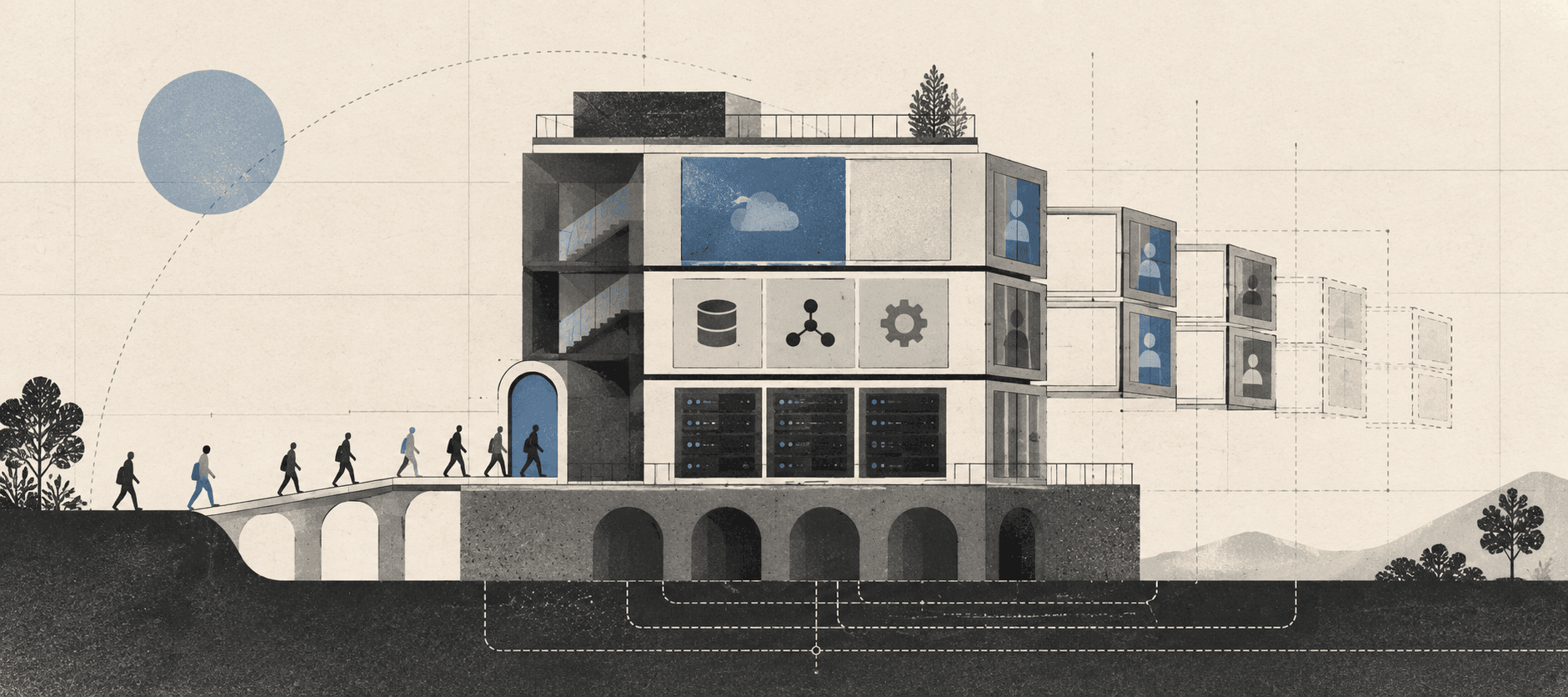
A first release needs enough structure to be safe and enough simplicity to change. These are the architecture decisions worth making before the product has traction.
An MVP is a learning system
A useful MVP is not a smaller version of an enterprise roadmap. It is the smallest product that lets a real user complete a valuable job and gives the team enough evidence to decide what comes next.
That means the architecture should optimize for clarity and feedback. Put the core domain in a shape the team can understand, keep boundaries visible, and avoid abstractions that exist only for a hypothetical scale problem.
- One primary user and one primary job to be done.
- A small number of complete flows instead of many partial features.
- Instrumentation for activation, failure, and repeat usage.
Choose boring foundations
A modern stack does not need to be complicated. A typed application, a managed database, a clear authentication boundary, and a repeatable deployment process are usually more valuable than a collection of fashionable services.
Choose tools the team can debug at 2 a.m. The architecture should make local development, previews, rollbacks, and data backups routine rather than heroic.
- Keep the first deployment path repeatable.
- Make data ownership and backup responsibility explicit.
- Use a modular monolith until a real boundary needs separation.
Design for change without overbuilding
The first users will teach you that some assumptions are wrong. Keep product rules in named modules, keep external integrations behind small adapters, and store important events so the team can understand what happened.
This is different from building every possible extension point. Build the seams you can already see; leave the rest simple until evidence creates a reason to change it.
- Name the domain concepts before naming the folders.
- Separate business rules from UI components.
- Make important state transitions observable.
Launch with a feedback loop
A launch is successful when the team can observe usage, talk to users, fix the right problems, and release safely. That requires a small operational checklist: error tracking, analytics, support ownership, backups, and a way to deploy a fix without drama.
The first architecture decision is therefore cultural as much as technical. Make learning part of the product loop from day one.
- Instrument the moments that define activation.
- Review support conversations alongside analytics.
- Ship small improvements and document what was learned.